
Uptaded on 2026
Effective period 2025-2027
Environmental Policy
HAE Group is a global, multi-platform air cargo industry services and solutions provider employing 322 people worldwide. Through this Environmental Policy, we commit to continuously improving our environmental performance while protecting human well-being and operating in line with all relevant environmental legislation.
We aim to contribute to the industry’s sustainability effort to achieve net-zero emissions logistics by 2050 by decarbonising day-to-day business practices, honouring our social corporate responsibility, and engaging in environmental activities.
We conduct our business in accordance with applicable laws and high ethical, social and environmental standards.
Framework and Alignment
This policy is aligned with key global sustainability frameworks, including:
- IATA Future of the Airline Industry 2035
- IATA Policy Roadmap 2024
- UN Global Compact Environmental Principles
- UN Sustainable Development Goals (SDGs)
- UNEP Environmental Guidance
- UNESCO Universal Declaration on Cultural Diversity
We share the aviation industry’s commitment to achieving net-zero carbon emissions by 2050 and recognise that this goal requires coordinated industry-wide action.
We are in the process of preparation for upcoming voluntary reporting:
- The UK Sustainability Reporting Standards. The UK SRS were published by the Department for Business and Trade on 25 February 2026 for voluntary use, based on the International Sustainability Standards Board (ISSB) IFRS S1 – general sustainability disclosures and S2 – climate-related disclosures.
Focus of the Policy
HAE companies operate within the highly interconnected global aviation network. Any disruption can create cascading effects; lack of adaptation in one location can reduce the effectiveness of action elsewhere. We recognise that the cost of infrastructure and operational adaptation is rising, but such investments must be weighed against the cost of inaction.
Due to the nature of our core businesses, the primary focus of our efforts is on our greenhouse gas (GHG) emissions and climate protection. However, our measures also cover a broad range of aspects such as energy and waste management, local pollution, loss of biodiversity and ecosystems degradation, stakeholder engagement as well as raising environmental awareness. To manage risks and mitigate our impacts on nature, our actions focus not only on our operations but also on the planet and society at large.
Scope
This policy applies to:
- All HAE offices in UK, Ireland, Netherlands, USA, UAE, Kenya, Brazil, Chile and Egypt.
- Aircraft & Cargo Handling Entities (Belfast Airport Handling & East Midlands Airport Handling)
- HAE Training Entity — TSA (Transport Security Associates)
- Groupair & AirCross (South Africa)
- HAE datacair (Kenya)
- Trucklink UK & T2 Transport, USA
The responsibility to promote, facilitate, and implement sustainability strategies lies with the Board of Directors, SMT, all departments, and both full-time and part-time employees.
Our Sustainability Team represents the diversity of HAE teams worldwide, coordinating ideas, initiatives, and engagement to support SMT and the Board in informed decision-making.
This policy is publicly available on the HAE Group website and internally via our Intranet, noticeboards, and email communications.
Policy Implementation, Reporting, and Responsibilities
This policy will be implemented through two distinctive strategies and setting relevant qualitative objectives and targets.
Reducing Our Footprint: Operations – GHG Scope 1, 2 and 3
In accordance with the Greenhouse Gas (GHG) Protocol, our operations primarily fall within office-based environments globally, with no ownership of physical premises, aircrafts or warehouses. Most of our company vehicles are leased and those that are owned are either electric or the most modern and fuel efficient possible. As a result, office-based companies of the group do not generate direct measurement of Scope 1 CO₂ emissions. All services, such as electricity, gas, water supply and waste recycling are included in our facilities lease agreements. Our Scope 2 emissions, associated with purchased electricity for our offices lighting, heating, cooling and operating office equipment are addressed through locally implemented reduction initiatives.
Exception are several companies of the group with Scope 1 emissions as they own cargo handling equipment, machines and vehicles: cargo handling companies such as Belfast Airport Handling, East Midlands Airport Handling and Groupair South Africa as well as transportation company such as Trucklink EU UK based company. They implement this policy but undergo or will undergo a separate Ecovadis assessment if required.
Our greenhouse gas emissions are primarily indirect Scope 3. They arise as a consequence of our activities but occur from sources owned or controlled by other entities.
We identify the following Scope 3 greenhouse gas emissions categories as per GHG Protocol:
- 1. Purchased goods and services
- 2. Capital goods
- 4. Upstream transportation
- 5. Waste generated in operations
- 6. Business travel
- 7. Employee commuting
- 8. Upstream leased assets
- 9. Downstream transportation and distribution
Qualitative Objectives and Quantitative Targets
Achieve net zero GHG and non-GHG emissions across scope 2 and 3
| Material topic | Qualitative objective | Quantitative target | Status and actions |
|---|---|---|---|
| Air pollution | By 2035, reduce local air pollutant and congestion impacts from employee commuting through reductions in kg CO₂e, and commuter traffic intensity. |
Scope 3 70% reduction in kg CO₂e* (*CO₂ SOx, NOx, PM emissions and dust) |
90% of headquarters staff work from home 4 days a week. SMT meeting conducted on Teams. Actions: Vehicle utilization optimization:
Create a system to track business travel mileage to assess impact. |
| Climate action | By 2035, reduce upstream leased assets like office space and electricity consumption |
Scope 2 indirect emissions Building emissions reduction by 90% |
Head office – 100% renewable energy supply. Office space has been reduced by 50%. Prioritise leasing offices worldwide that are powered by renewable energy and relocate to energy-efficient buildings. |
| IT equipment emission reduction by 60% |
Select products with a low carbon footprint from suppliers committed to achieving net zero by 2050. Dispose of on-site data-storage infrastructure and migrate our systems to cloud-based infrastructure. |
||
| By 2035, implement a comprehensive electronic waste, generated across operations reduction and recycling |
Scope 3 direct and indirect emissions 100% certified disposal of hazardous waste and IT hardware 100% data-safe disposal compliance devices before recycling Extending average device lifespan by 30% |
Our redundant laptops, IT and electrical equipment safe and secure disposal is processed and certified by Gigacycle. Collecting data to measure implementation progress |
|
|
Refurbish and reuse 30% of retired electronic devices Hazardous waste, like printer cartridges save disposal 20% reduction in e-waste per employee |
Safe disposal agreement with the equipment provider. Raise employee awareness on IT devices impact on environment |
||
| By 2035, transition to digital documents management |
Scope 3 Go 90% paperless |
We currently generate monthly paper consumption reports for several companies using the same copy machine but data is not analysed and not separated specifically for HAE UK. Generate HAE UK paper consumption in the headquarters office reports every 6 month to monitor the progress. Analyse the data and raise employee awareness by promoting behavioural change such as switching off unused equipment, avoiding unnecessary printing |
|
| Implement 100% secure digital employee personal files storage |
Currently we have 50/50 hard and electronic copies of employee personal files. Identify relevant software and assure 100% safe storage of employee personal documents. |
||
| By 2030, ensure that strategic suppliers, have low-carbon products/services available or have validated carbon reduction targets in place. |
Scope 3 Achieve 100% supplier auditing 90% of purchased good and services will be directed to suppliers offering low-carbon products and services. |
Just starting working on supplier auditing, a new position is created to implement sustainable procurement Suppliers list and their products policies need reviewing. Categorise suppliers by their commitment to reduce their services or products emissions Environmental and Social Clause inclusion into supplier contracts |
|
| By 2030, reduce emissions from local and international business travel including reduction in short-haul flights and increased use of lower-carbon travel alternatives. | Reduce business travel emissions by 20% |
We already are prioritising virtual meetings. Analyse business travel records to identify a baseline to measure progress Implement a train-first policy for long-distance local and international travel instead of cars Choose the most carbon-efficient routs and finding low-carbon flights Low carbon accommodation: choose hotels with low carbon footprint |
|
| By 2028, develop employee environmental awareness training programme | 100% employee engagement and environmental awareness worldwide |
We do not have a structured environmental awareness programme, only fragmented information on the Intranet about our impact and initiatives. Encourage staff participation and creativity to develop new ideas for reducing our emissions |
|
| By 2027 embed carbon calculator into our booking system | 100% customer, shipper and consignee environmental awareness |
The booking confirmation will provide CO₂ calculation for the shipment delivery Engage and encourage customers to contribute to our offsetting project |
Increasing Our Handprint: climate change mitigation and biodiversity initiatives beyond our own value chain and beyond compliance
Nature-positive interventions can have a positive impact on climate change mitigation. According to UNDP experts deploying measures in agriculture, forestry, wetlands and bioenergy could feasibly and sustainably contribute to the reduction of about 30%. Forests are key contributors to climate change mitigation.
IATA identifies several essential components required for the aviation industry to achieve net zero carbon emissions. Carbon offset projects are one of these components and are expected to play an important role in meeting interim targets during the transition. As IATA (2023) states, Investments in high-quality carbon offsets are frequently linked to a range of socio-economic co-benefits that help address a variety of United Nations Sustainable Development Goals, such as creating jobs, improving the health of local communities, and helping with gender equality.
Decarbonisation through offsetting represents the second most significant contribution (19%) within IATA’s net zero strategy during the transition to more sustainable aviation practices.
The Empty Spaces project in Ngangu village in Kenya is our contribution to IATA and our principle airlines decarbonisation strategy is about more than carbon sequestration or fruit production alone. It is about rethinking how industry, community, and nature can work together in response to shared risk.
| Material topic | Qualitative objective | Quantitative target | Status and actions |
|---|---|---|---|
| Climate action |
By 2035, unlock the full value of the carbon project in support of the aviation industry’s interim climate commitments, delivering measurable emissions reductions alongside broader environmental and social outcomes. Through regenerative agriculture, establish long-term carbon sequestration that protects livelihoods, restores biodiversity and ecosystems, strengthens community resilience, and advances sustainable food security. |
Scope 3 Deliver 68-70t CO₂e tCO₂e of carbon sequestration and emissions reductions annually from 2030 |
Currently planted and verified 2500 fruit trees |
| Planting 30,000 fruit trees | |||
| Engage over 2000 smallholder farmers |
Started from 30 in 2024, 150 farmers signed up for the project and received fruit trees. have been trained in tree propagation techniques, pest management and soil conservation. Continues onsite training and awareness raising Community organisation established to monitor project implementation, collecting data and reporting |
||
| Increase participating household incomes by 15–20% | Anticipated outcome when farmers can start selling their fruits | ||
| Reduce synthetic fertilizer and pesticide use by 80% | Conditionality attached to gifted trees and their own grafted trees to transition to use of organic fertilisers and pesticides | ||
| Reduce seasonal food insecurity by 40% | Anticipated outcome when farmers can start selling their fruits. |
Advocating Nature Services and Engagement with Stakeholders
Countries around the world depend on a range of vital natural services to help maintain the health and stability of their communities and economies. Better known as biodiversity and ecosystem services, these include food provision, water security and regulation of local air quality among others. There is a clear need for the global community to understand the economic risks of deteriorating biodiversity and ecosystems.
In 2025 we will focus on pollination. HAE UK and HAE Kenya in cooperation with our members of staff, local expert beekeepers, are going to prepare a special HAE branded environmental gifts, a jar a honey. The gifts with a message will be distributed to our customers in the UK and Kenya.
HAE Group supports the United Nations 2030 Agenda for Sustainable Development, which outlines 17 Sustainable Development Goals (SDGs).
Relevant SDGs
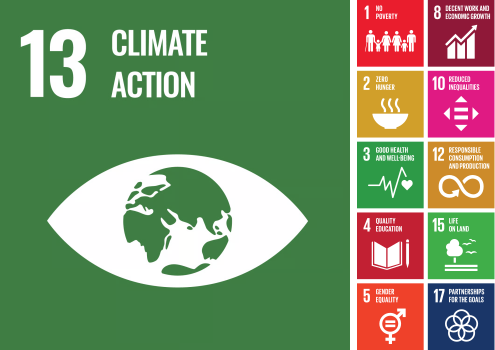
We are committed to operating in a responsible manner in support of our industry's goals.
- 1. No poverty
- 2. Zero Hunger
- 3. Good health and well-being
- 4. Gender Equality
- 8. Decent work and economic growth
- 10. Reduced Inequalities
- 12. Responsible consumption and production
- 13. Climate action
- 15. Life on land
- 17. Partnerships for the goals
Policy Accountability
To embed sustainability across all levels and integrate it into our strategy, we have formal accountability structures:
Board of Directors
- Reviews and approves all policies
- Approves annual budget for sustainability initiatives
- Guides management of key risks and opportunities
- Allocates resources to support sustainability efforts
SMT
- Proposes strategies to the Board and integrates approved sustainability considerations into decision-making
- Communicates policies to customers
- Supports efforts to improve performance against priority sustainability ratings and awards.
- Enables the execution of our sustainability strategy
Sustainability Team
- Advises on ESG strategy development and propose targets
- Influences decisions that could impact the company’s sustainability strategy
- Develops and coordinates company-wide sustainability initiatives
- Engages partners and suppliers
- Conducts assessments and annual reporting
- Audits policies and recommends actions
- Monitors performance against our sustainability goals and priority ratings and awards
HAE Group Sustainability Team
- Karen Beardsell, HAE UK
- Andrea Hoban, HAE UK
- Sheeraz Elahi, HAE UK
- Mark Hutchiinson, HAE UK
- Colin Black, BAHL
- Angelicah Righa, HAE Kenya
- Geneviev van der Nest, Aircross South Africa
- Mercy Rotich, datacair Kenya
- Catherine Miriri, datacair Kenya